


What to do before, during, and after a reduction in force.
We recently posted about the news of a layoff wave at Oracle of 30,000 employees. As reported, it was done via email all at once, with no face-to-face meetings or phone calls from managers. The email did provide guidance on next steps and severance packages, but fired up to 30,000 human beings from their inbox.
There was a lot of debate in the comments about whether it was right or wrong, how Oracle should have planned better while booking record profits, and whether employees should have been supported in preparation for the layoff or afterward. One person said they did it right when at Fidelity by giving employees a smooth off-ramp: a bonus to stay the next six months until termination, resume help, and career guidance. A former Microsoft employee said their experience was email, which was appreciated to be able to process the information alone, make the calls they needed to, and avoid the rumor-mill panic of people being fired via meetings, or worse, in a group meeting. But they seemingly weren’t supported afterward either, and were not considered for similar roles posted after they were let go.
So what’s the right answer?
Unfortunately, there isn’t one. Some businesses lay off people to boost profits and others because they’ll have to close their doors if they don’t. Human Resources departments are often put in the position of laying off people at the direction of executives. Those decisions are usually out of the hands of HR as they try to take care of the human aspect of business.
What we can do here is go through the decisions that can be made before, during, and after layoffs. It’s important to say that getting to the point of deciding to fire that many people all at once is often a sign of poor planning, but it can also be a sign that a company is trying to stay afloat during tough times. In this specific case, Oracle’s cuts came in the same period the company reported a quarterly profit increase of 95% to $6.13 billion, while also committing heavily to AI infrastructure spending, which doesn’t appear to match up with economic strain to those analyzing the decision from the outside.
What about the Economics?
Jack Welch popularized cutting jobs to improve company performance, starting in the 1980s. Businesses often cut jobs and point to increased short-term profitability and efficiency as the reason for doing so. This has been adopted as a proven strategy for decades, but the research doesn’t support it as a way to increase performance. Note: This is separate from extreme situations like bankruptcy where if a company does not cut costs, they will go out of business.
Wayne Cascio, University of Colorado Denver has studied layoffs in public companies extensively. His finding is that there is no significant, consistent evidence that downsizing improved financial performance measured by return on assets or industry-adjusted return on assets. His conclusion was that firms couldn’t save or shrink their way to prosperity, and only growing the business produced outperformance.
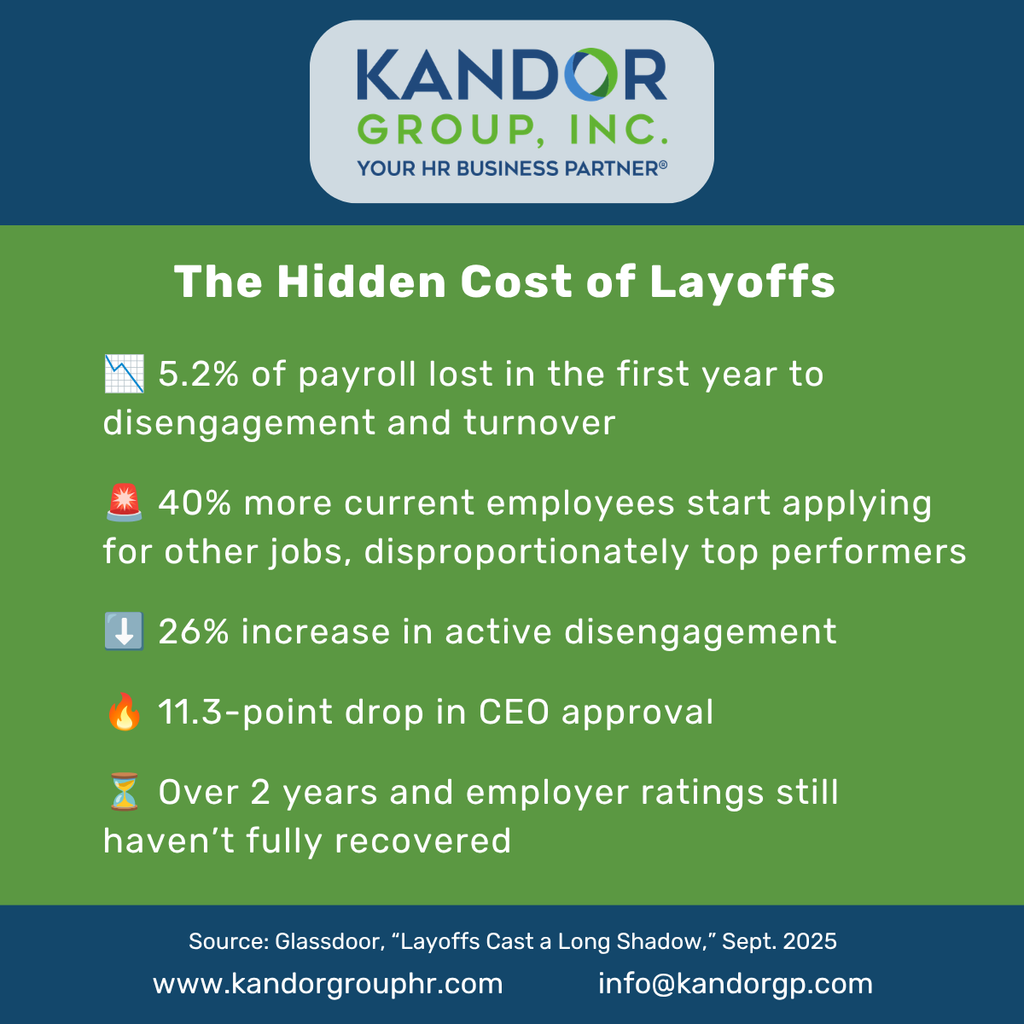
Glassdoor’s September 2025 study analyzed 298,314 reviews across 197 companies and 304 layoff events, controlled for stock performance. They found that layoffs cost those companies an estimated $20.8 billion in the first year through disengagement and voluntary turnover, about 5.2% of payroll. This produced a 26% increase in active disengagement and a 40% increase in current employees applying for jobs. Employer ratings dropped and the highest-rated employers took twice the hit, showing no recovery in the two-year study window.
Leadership IQ surveyed 4,172 survivors across 318 companies. 74% said their own productivity declined after the layoff, 69% said product or service quality declined, 87% were less likely to recommend the company as a place to work, and 81% said customer service had gotten worse.
There is a counterargument. Other studies have found stock prices rise when layoffs are announced. Those looking at short-term stock price see this as enough of a reason to execute regular layoffs. However, the damage of layoffs shows up later, and is harder to quantify. It’s affected by many factors: size of layoff, time, economics, industry trends, and many more influences outside the company.
This means, in most situations, there are better alternatives than firing people. So let’s take a closer look at what can be done instead.
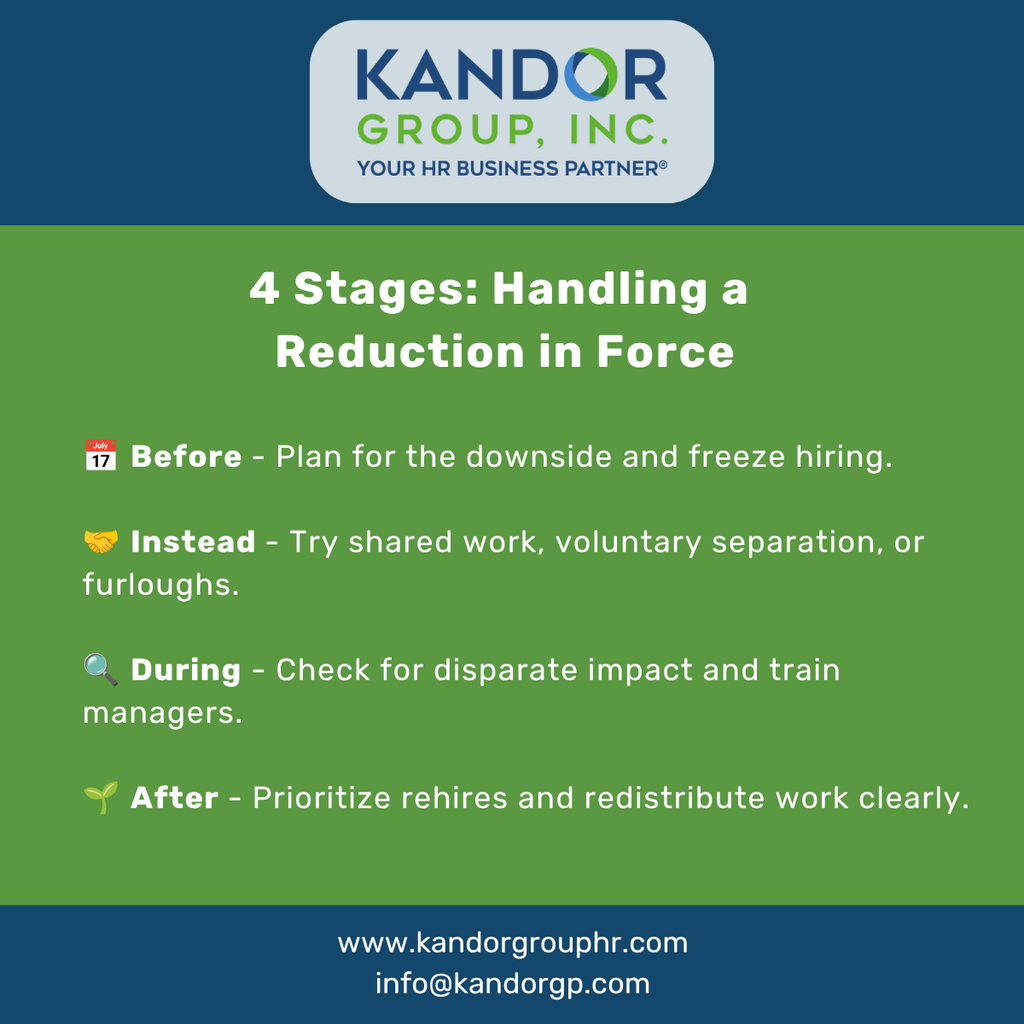
What Can You Do Before Layoffs?
Avoiding the point of layoffs is always the primary goal, and it can be done with better planning and working with your employees to get your company back in the black. For the sake of your employees, culture, and long-term organizational health, layoffs should be the last-ditch effort. It can destroy your culture, reputation, and ability to recruit top performers. Avoid it with these methods:
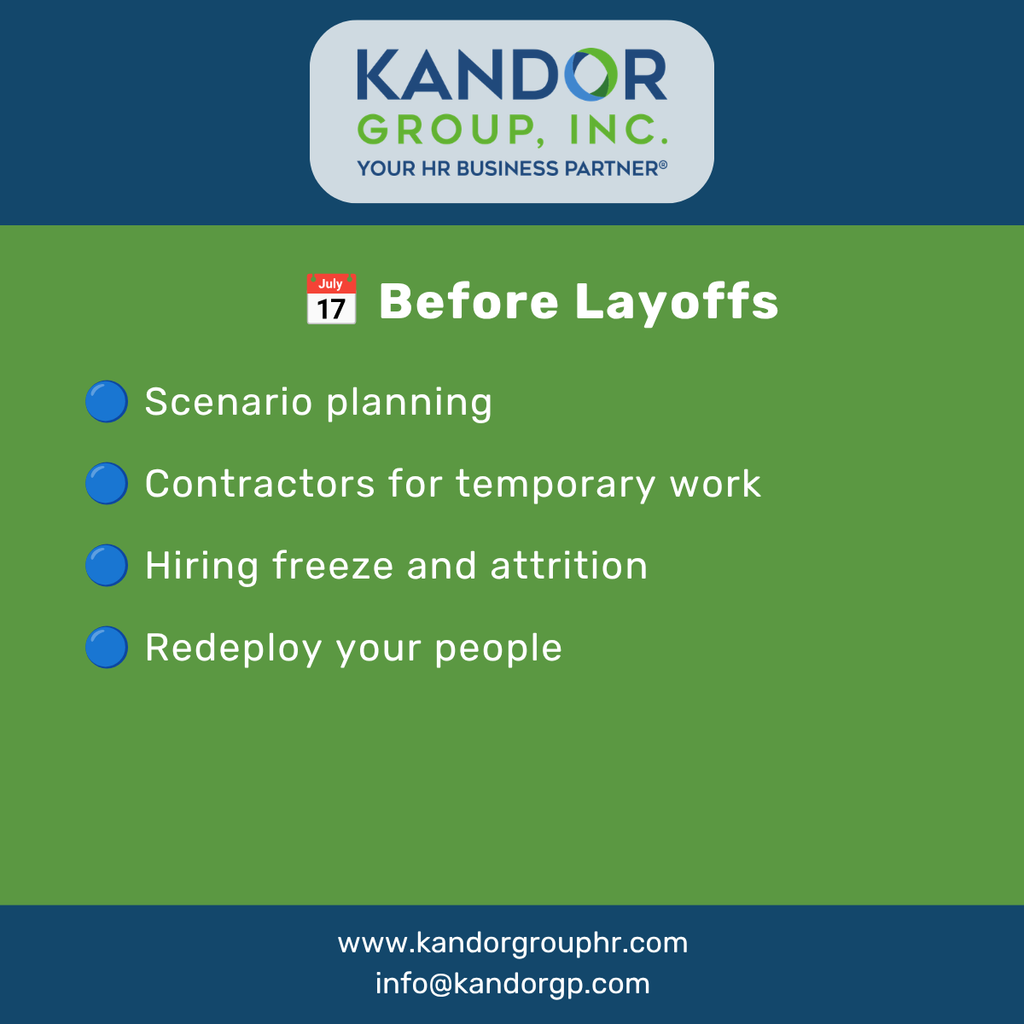
Add scenario planning to forecasting – It’s easy to model the optimistic case, but you have to plan for the downside case as well to avoid bloat and firing people later.
Use contractors for temporary work – If you need temporary help, contractors can help you absorb peak demand without making the commitment of long-term employment.
Hiring freeze & attrition – Seeing a rough road ahead is a great time to pause hiring, and with normal attrition people will leave on their terms. That can reduce headcount by as much as 10-15% in a year, according to common benchmarks.
Redeploy your people – Perform regular skills assessments of your employees and redeploy them internally if one department is heavy and another is light.
What Can You Do Instead of Layoffs?
Layoffs should be the last effort for ensuring a company stays a going concern. There are many levers to pull that can save the company money and save jobs at the same time. All of these are extremely valuable to avoid letting the people go who are building, and have built, the business.
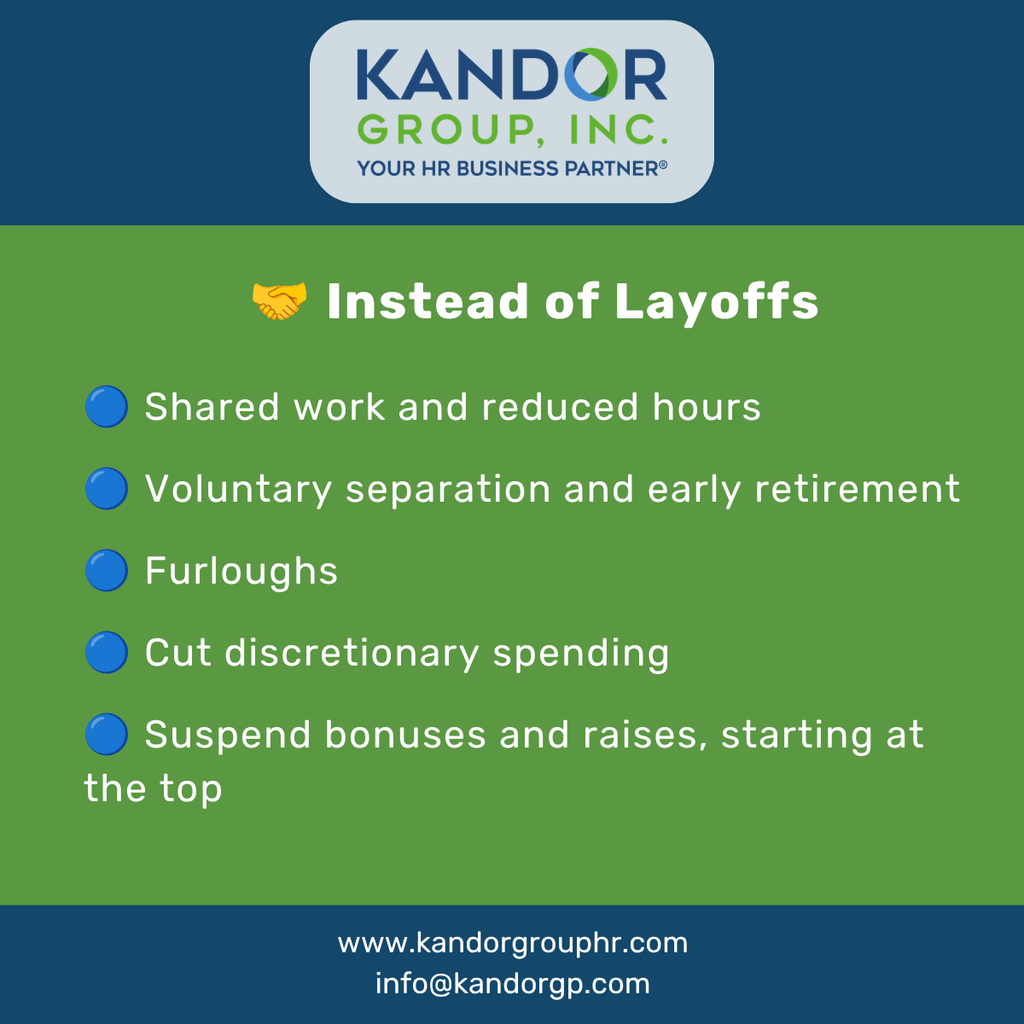
Shared work and hour reductions – This is the most important option that most employers have never heard of. When a company is going through a rough time or transition, reducing hours for everyone can save a lot of money, while keeping your team on board and working toward a path to a healthier company. Most employees would rather work a 4-day week with a temporary 20% pay cut to help everyone, rather than see anyone be fired. The Texas Workforce Commission Shared Work Program even provides support for these situations in the form of a percentage of unemployment benefits for workers with reduced hours.
Voluntary separation and early retirement – These go along with the above as a way to let employees who have been thinking about leaving or retiring do so when the company needs cash the most. Those who have been thinking about leaving get to leave on their own terms.
Furlough – Unpaid time off can reduce costs while keeping employee benefits. Often, employees are happy to have more time off, even unpaid to rest and recharge, and it can save the company money as well.
Cut Spending – Discretionary spending in areas like travel, consultants, contractors, and events are easy ways to reduce costs quickly. Be careful of permanent cuts to these areas. Travel has become a perk to many employees and company events show employees appreciation and build camaraderie. The biggest danger with these types of cuts is that the benefits aren’t reinstated.
Suspend bonuses and raises – This has to be done across the board, and the cuts should be greater for those farther up the chain. Cutting pay of workers requires a greater sacrifice for those making the decisions, such as greater % cuts to executives than other employees, for example. Also, create a timeline for restoring them that you’re sure you can meet. It’s better to reinstate them early than announce a push back of the date.
What Can You Do During Layoffs?
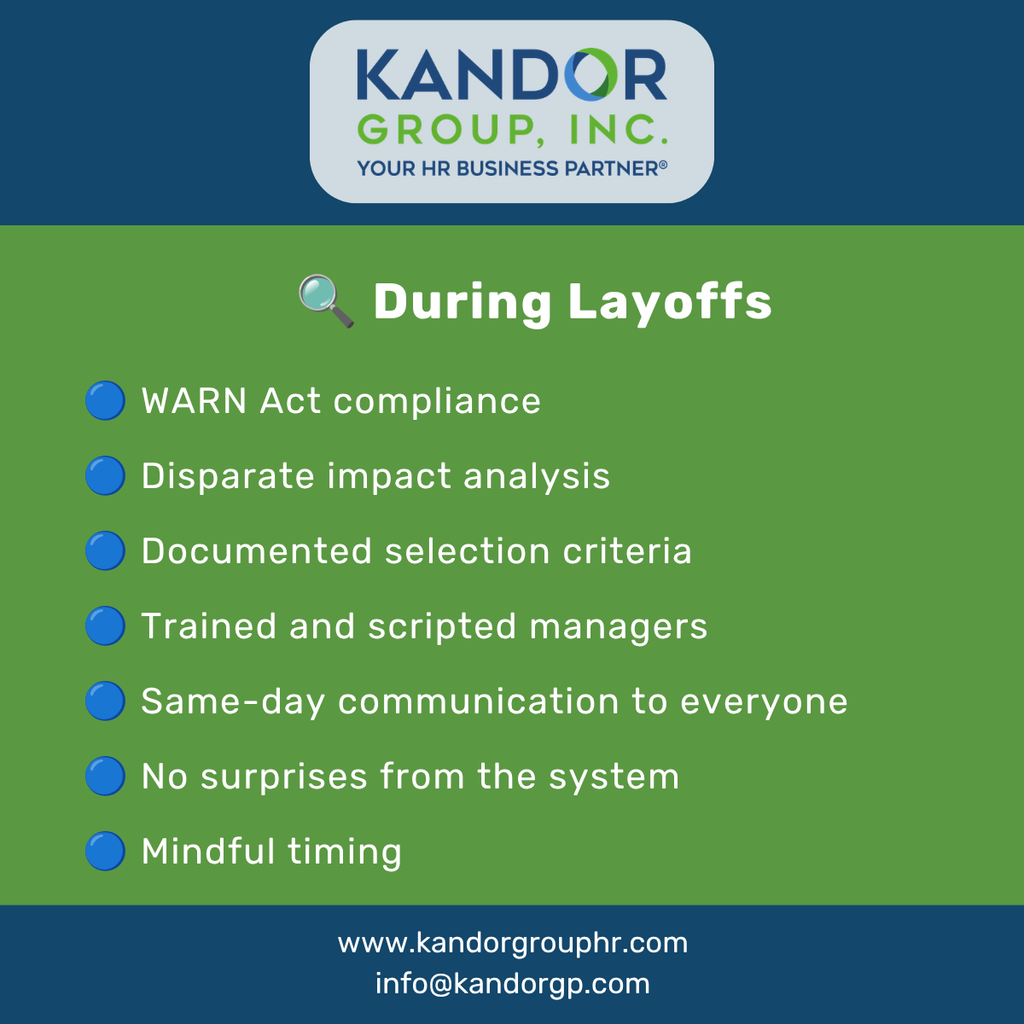
If layoffs are moving forward, there are a lot of pieces to put in place for the good of the company and its former, current, and future employees.
WARN Act compliance – Federal WARN generally applies to employers with 100 or more employees and requires 60 days’ written notice before a site closing affecting 50+ employees, or a mass layoff of 500+ (or 50+ if they make up at least a third of a site’s workforce). Several states have stricter mini-WARN laws with lower thresholds.
Run a disparate impact analysis on the selection list before you execute – This may remind you of the recent Deloitte article we covered where their algorithm was penalizing working mothers who took time off because they had less time on the clock than other employees. Look at tenure, recent job performance, department, and build a list by age, gender, ethnicity, proximity to retirement, education, and protected leave status. You may see patterns that show you’re eliminating a certain group of people without knowing that the scoring is biased.
Document selection criteria – Ensure every manager has the proper selection criteria and applies it the same way.
Train and script managers – No matter how the layoff is done, managers need preparation, training, and the resources to provide employees with answers and next steps, whether the news is delivered in person or by email.
Tell the rest of the employees on the same day – News spreads as soon as the first person finds out, whether that’s in-person, video call, or email. Silence in these situations causes stress, anxiety, and panic. Let everyone know exactly what is happening and who is safe.
Don’t let people find out from the system – A failed badge scan, getting locked out of email, or being removed from Slack channels is a confusing, frustrating experience, and those stories will follow your company for years.
Watch the timing – Fridays, holidays, and dates immediately before vesting or benefit milestones all look terrible even when unintentional.
What Can You Do After Layoffs?
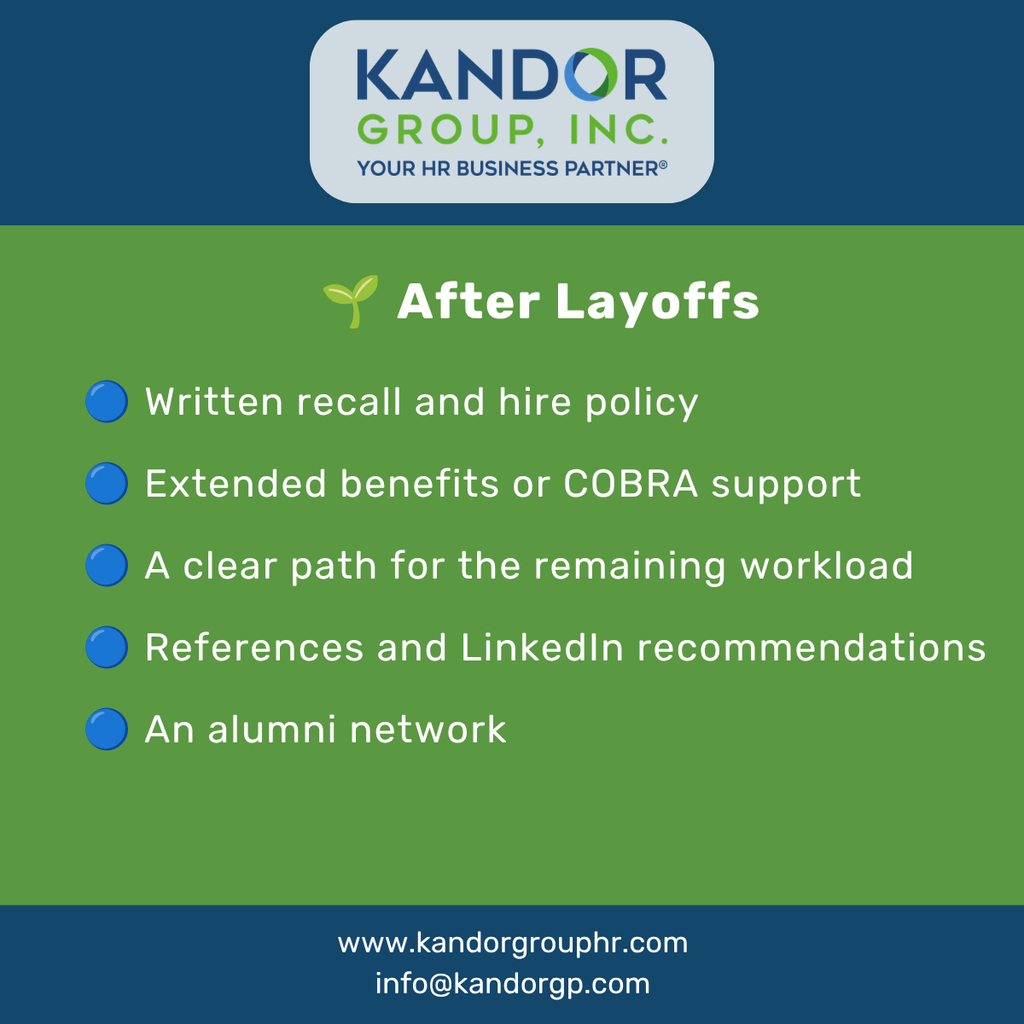
If layoffs have already happened (or are going to), now it’s time to support the people who supported your company as they start the next chapter of their career.
A written recall and rehire policy – The Microsoft commenter on LinkedIn saw his own job title reposted 30 days later, but was never considered for the role. If you’re going to backfill within 6 months, laid-off employees should get priority consideration. Put this in writing.
Provide extended benefits or subsidize COBRA for a defined period – Insurance is expensive and necessary to keeping people and their families healthy. Providing this can take a lot of stress off people who are leaving. For the company, it’s a small cost that provides a lot of benefit and goodwill for the people.
Address the remaining workload – Don’t ignore that the people who were just fired probably had a full plate for work yesterday. Someone else now has to take on that workload. Let your employees know and tell them exactly how it’s going to be handled.
Offer references and LinkedIn recommendations – Referring employees to other companies and providing recommendations, both in a PDF and on LinkedIn, can help people land on their feet. If downsizing is necessary, you’re letting good people go, and other companies would love to have them on board. Do this proactively, as many employees won’t come back to ask.
Create an alumni network – It’s cheap to create and turns former employees into a rehire pipeline and referral source. Ensure it’s provided to all current and former employees.
The Final Answer

Layoffs are a tough topic. The Jack Welch method of layoffs to balance the books can ruin your culture, reputation, and instill a sense of fear, preventing employees from doing their best work. This fear does not leave with tenured employees. It gets ingrained into the culture and taught to new employees as well.
There are many ways to prevent a company from getting to this point, from prior planning and better forecasting to redeployment and furlough. The problem is that these methods require more upfront work, planning for the unexpected, and harder conversations than a faceless email saying “thank you for your service”. It may require sacrifice farther up the leadership ladder, shared pain, or rebuilding the organization. Avoid layoffs at all costs if you can, and if you can’t, help your people before, during, and after. It’s a small investment to help the people who helped you build something amazing.
If you’re even considering layoffs, please reach out to Kandor Group. We can help you restructure and implement solutions that don’t require letting go of your employees.
Your people are worth it.
